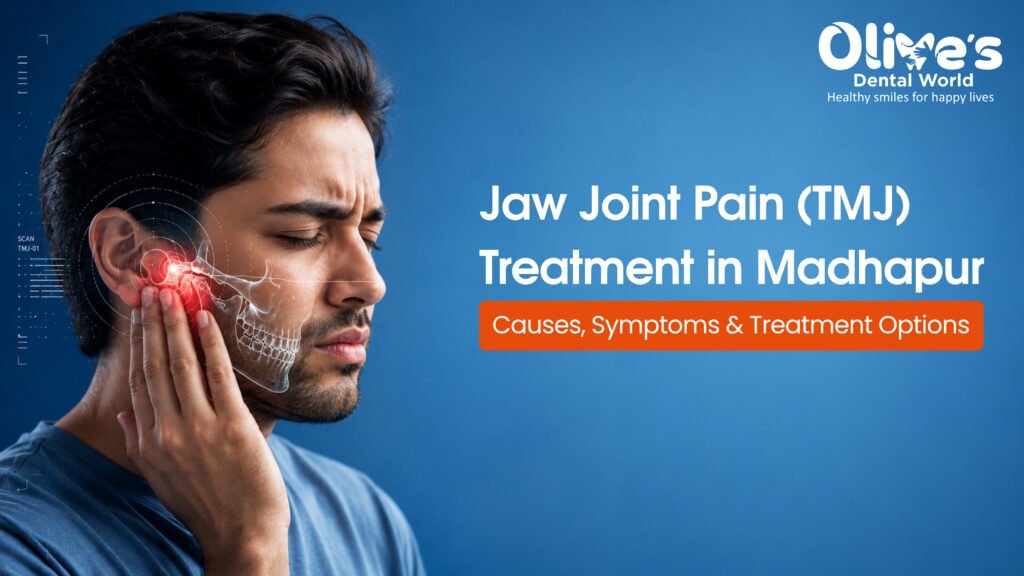
Jaw pain can make even the simplest daily activities like eating, speaking, laughing, or yawning feel uncomfortable. If you’ve been experiencing persistent jaw pain, clicking sounds while opening your mouth, headaches, or difficulty chewing, you may be suffering from a Temporomandibular Joint (TMJ) Disorder.
TMJ disorders are more common than many people realize and can affect people of all ages. Fortunately, with early diagnosis and the right treatment, most TMJ problems can be managed successfully without surgery.
If you’re looking for Jaw Joint Pain (TMJ) Treatment in Madhapur, Dr. Aditya Jagini, Prosthodontist & Implantologist, offers comprehensive diagnosis and personalized treatment plans to relieve pain, restore jaw function, and improve your quality of life.
What is the Temporomandibular Joint (TMJ)?
The Temporomandibular Joint (TMJ) is the joint that connects your lower jaw (mandible) to the skull, located just in front of each ear.
It acts like a sliding hinge, allowing you to:
- Open and close your mouth
- Chew food
- Speak comfortably
- Yawn
- Move your jaw side to side
When this joint or the surrounding muscles become irritated or damaged, it leads to a condition known as Temporomandibular Disorder (TMD).
What Causes TMJ Disorders?
There isn’t always one single cause. TMJ disorders often result from a combination of factors.
Common causes include:
Teeth Grinding (Bruxism)
Grinding or clenching your teeth especially during sleep places excessive pressure on the jaw joint.
Jaw Injury
An accident, sports injury, or direct trauma can damage the jaw joint.
Arthritis
Both osteoarthritis and rheumatoid arthritis may affect the TMJ.
Misaligned Bite
An improper bite or uneven teeth can strain the jaw muscles.
Stress
Stress often causes unconscious jaw clenching and muscle tension.
Missing Teeth
Missing teeth may change the way your jaw functions, leading to joint imbalance.
Disc Displacement
A small cartilage disc inside the joint may shift out of position, causing pain and clicking.
How is TMJ Diagnosed?
At the clinic, Dr. Aditya Jagini performs a detailed examination to identify the exact cause of your symptoms.
Diagnosis may include:
Clinical Examination
The dentist checks:
- Jaw movement
- Muscle tenderness
- Bite alignment
- Joint sounds
- Mouth opening range
Digital X-rays
To evaluate the jaw bone and surrounding structures.
CBCT Scan
Provides a detailed 3D view of the jaw joint when required.
Bite Analysis
Identifies bite imbalances contributing to joint stress.
Treatment Options for TMJ Disorders
Treatment depends on the severity and underlying cause.Most patients improve with conservative treatments.
1. Custom Night Guards
Night guards protect teeth from grinding and reduce pressure on the jaw joint.
Benefits include:
- Reduced jaw pain
- Less teeth grinding
- Better sleep
- Protection against tooth wear
2. Bite Adjustment
If an uneven bite contributes to TMJ pain, minor corrections can improve jaw alignment.
3. Physiotherapy Exercises
Simple jaw exercises help:
- Strengthen muscles
- Improve mobility
- Reduce stiffness
- Restore jaw function
4. Medications
Depending on the condition, medications may include:
- Pain relievers
- Anti-inflammatory medicines
- Muscle relaxants
These are typically prescribed for short-term symptom relief.
5. Stress Management
Since stress often worsens jaw clenching, relaxation techniques such as meditation, breathing exercises, and adequate sleep can help reduce symptoms.
6. Lifestyle Changes
Small daily habits can make a big difference.
Recommendations include:
- Avoid chewing gum
- Eat soft foods temporarily
- Limit wide mouth opening
- Avoid nail biting
- Reduce excessive jaw movements
7. Dental Rehabilitation
If missing teeth or bite problems are causing TMJ issues, treatments such as crowns, bridges, implants, or full-mouth rehabilitation may restore proper jaw function.
8. Advanced TMJ Therapy
For persistent or complex cases, advanced treatment options may be recommended after a comprehensive evaluation.
Can TMJ Disorders Go Away on Their Own?
Some mild TMJ symptoms improve with rest and home care.
However, persistent pain should never be ignored because untreated TMJ disorders may lead to:
- Chronic pain
- Restricted jaw movement
- Increased tooth wear
- Difficulty eating
- Frequent headaches
- Muscle spasms
Professional evaluation helps prevent long-term complications.
Can TMJ Be Prevented?
While not every case can be prevented, these habits reduce the risk:
- Avoid grinding teeth
- Wear a mouthguard if recommended
- Maintain good posture
- Manage stress
- Replace missing teeth promptly
- Attend regular dental check-ups
- Avoid excessive chewing habits
Why Choose Dr. Aditya Jagini for TMJ Treatment in Madhapur?
TMJ disorders require careful diagnosis because the symptoms often resemble ear problems, headaches, or muscle pain. Dr. Aditya Jagini focuses on identifying the root cause rather than simply treating the symptoms.
Patients benefit from:
- Comprehensive TMJ evaluation
- Personalized treatment plans
- Advanced digital diagnostics
- Conservative, evidence-based care
- Customized night guards
- Expertise in bite correction and prosthodontics
- Patient-focused treatment approach
- Comfortable clinical environment
The goal is to relieve pain, restore normal jaw movement, and improve long-term oral health.
Frequently Asked Questions (FAQs)
1.Is TMJ disorder permanent?
No. Many cases improve with appropriate treatment, lifestyle changes, and preventive care.
2.Does jaw clicking always require treatment?
Not always. If clicking occurs without pain or limited movement, it may not require immediate treatment. However, persistent or painful clicking should be evaluated.
3.Can stress cause TMJ pain?
Yes. Stress commonly leads to jaw clenching and teeth grinding, both of which can contribute to TMJ disorders.
4.Is surgery necessary for TMJ disorders?
Most patients respond well to non-surgical treatments. Surgery is considered only in rare, severe cases when conservative treatments have not been effective.
5.Can TMJ cause headaches?
Yes. TMJ disorders often lead to tension headaches, facial pain, and discomfort around the temples due to strain on the jaw muscles.
Struggling with Jaw Pain? Consult a TMJ Specialist Today
Jaw joint pain should never be ignored, especially when it interferes with eating, speaking, or your daily comfort. Early diagnosis and appropriate treatment can help prevent complications and significantly improve jaw function.
If you’re experiencing symptoms of a TMJ disorder, consult Dr. Aditya Jagini for expert Jaw Joint Pain (TMJ) Treatment in Madhapur. With a personalized treatment plan, advanced diagnostic techniques, and a patient-centered approach, you can achieve lasting relief and regain a comfortable, healthy smile.
Book your consultation: +91 954 20 32 323
visit our website: https://olivesdentalworld.com/about/