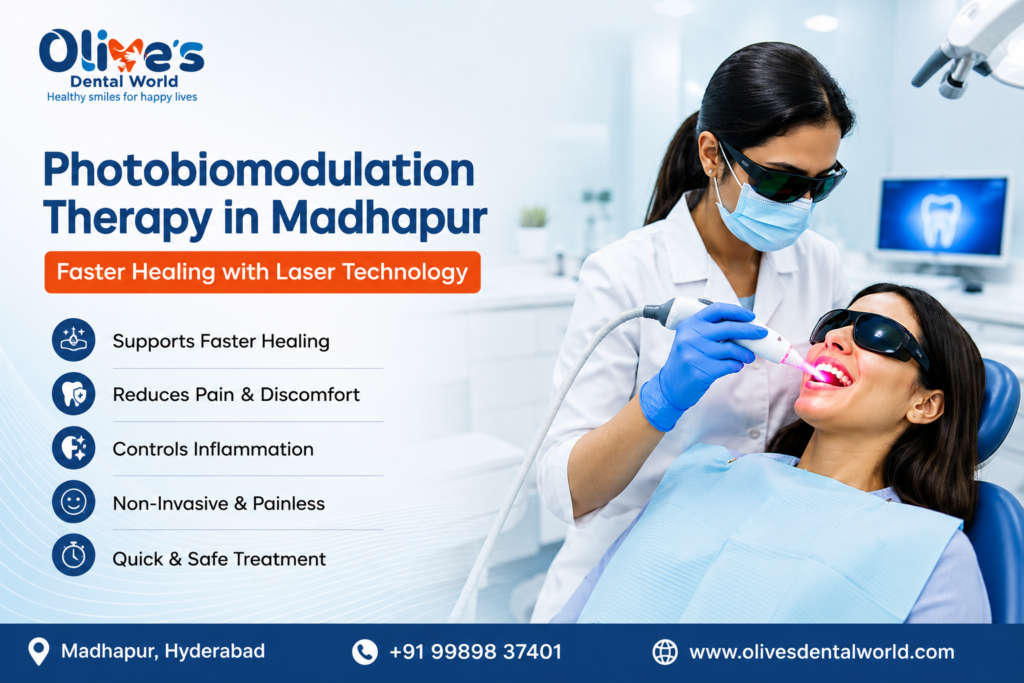
Healing after dental procedures can sometimes involve discomfort, swelling, and a longer recovery period. Modern dentistry now offers advanced technologies designed to support the body’s natural healing process. Photobiomodulation Therapy (PBM) is one such technology that uses controlled light energy to promote tissue repair, reduce inflammation, and improve patient comfort.
For patients looking for advanced dental care in Madhapur, photobiomodulation can be a useful supportive treatment after certain dental procedures. But what exactly is PBM, and how does laser light help the healing process? Let’s explore.
What Is Photobiomodulation Therapy?
Photobiomodulation therapy, commonly called PBM or low-level light therapy, is a non-invasive treatment that uses specific wavelengths of light to stimulate biological activity within cells.
Unlike surgical lasers that are used to cut or remove tissue, PBM uses light at therapeutic levels to support cellular functions. The light energy can interact with cellular structures and may help encourage processes involved in tissue repair and inflammation control.
In dentistry, PBM may be used as an adjunct to conventional treatment to support recovery following procedures such as tooth extraction, implant placement, periodontal treatment, or other oral surgeries.
How Does Photobiomodulation Work?
The basic principle behind PBM is the interaction between light and cells.
During treatment, a dental laser or specialized light device delivers a controlled amount of light energy to the targeted area. The light can be absorbed by components within cells, particularly structures involved in energy production.
This may support:
- Cellular energy production
- Tissue repair
- Blood circulation in the treated area
- Reduction of inflammation
- Reduction in post-treatment discomfort
- Overall recovery of soft tissues
The exact response can vary depending on the treatment, light wavelength, dosage, and individual patient factors.
Benefits of Photobiomodulation in Dentistry
1. Supports Faster Tissue Healing
One of the primary reasons PBM is used in dentistry is to support the body’s natural healing mechanisms. By influencing cellular activity, photobiomodulation may help tissues recover after dental procedures.
2. May Reduce Post-Treatment Discomfort
Some dental procedures can result in temporary soreness or discomfort. PBM may help manage inflammation and support the body’s natural response following treatment.
3. Helps Control Inflammation
Inflammation is a normal part of healing, but excessive inflammation can contribute to discomfort and swelling. Photobiomodulation may help regulate inflammatory responses in treated tissues.
4. Non-Invasive Treatment
PBM does not require additional surgical intervention. The light is applied externally or directly to the treatment area according to the dental professional’s protocol.
5. Can Support Soft-Tissue Recovery
The therapy may be useful for supporting healing in oral soft tissues following selected dental procedures.
6. Short Treatment Sessions
PBM sessions are generally relatively quick. Your dentist will determine the appropriate duration and frequency based on the procedure and your individual needs.
When Is Photobiomodulation Used in Dentistry?
Photobiomodulation isn’t necessary for every dental patient. Your dentist may consider it as a supportive treatment in situations such as:
- After tooth extraction
- Following dental implant procedures
- Periodontal treatments
- Oral surgical procedures
- Soft-tissue healing
- Certain painful or inflammatory oral conditions
- Recovery following selected dental treatments
The suitability of PBM depends on your oral health, the procedure performed, and your dentist’s clinical assessment.
Is Photobiomodulation Painful?
Photobiomodulation is generally considered a comfortable, non-invasive procedure. Patients typically do not experience the cutting or drilling sensation associated with some dental procedures.
You may feel little or nothing during the application. However, the experience can vary depending on the treatment area and equipment being used.
How Long Does Recovery Take After PBM?
Photobiomodulation is intended to support the body’s natural healing process rather than instantly heal treated tissue.
Your recovery time will depend primarily on the dental procedure you have undergone, your general health, oral hygiene, and how closely you follow your dentist’s aftercare instructions.
PBM may be recommended as part of a broader treatment and recovery plan rather than as a replacement for conventional dental care.
Benefit From Photobiomodulation Therapy?
Patients undergoing procedures that involve tissue healing may potentially benefit from PBM. However, it is not automatically appropriate for everyone.
A dentist will consider factors such as:
- Type of dental procedure
- Location and extent of tissue injury
- Existing oral health conditions
- Medications and medical history
- Healing requirements
- Individual treatment goals
A professional evaluation is important before starting any laser-based therapy.
Photobiomodulation vs. Traditional Laser Dentistry
It is important to understand that PBM and conventional dental laser procedures are not the same.
| Photobiomodulation Therapy | Traditional Laser Treatment |
| Primarily supports cellular activity and healing | May be used to modify, remove, or treat tissue |
| Uses therapeutic light energy | Uses laser energy for specific dental procedures |
| Non-invasive | May involve direct treatment of tissue |
| Often used as an adjunctive therapy | Can be a primary treatment technique |
| Focuses on recovery and tissue response | Used for various surgical or dental applications |
The appropriate laser technology depends on the specific dental condition and treatment objective.
Why Choose Advanced Dental Technology in Madhapur?
Madhapur is home to numerous modern dental clinics offering advanced diagnostic and treatment technologies. Patients should look beyond the availability of a particular device and choose a dental practice that combines technology with proper clinical evaluation.
When considering photobiomodulation therapy, ask your dentist:
- Is PBM appropriate for my condition?
- How will it complement my primary treatment?
- How many sessions may I need?
- What benefits can I realistically expect?
- Are there any precautions I should follow?
An experienced dental professional can recommend whether PBM is appropriate for your individual situation.
What to Expecting During a Photobiomodulation Session
A typical session may involve the following steps:
1. Dental Assessment:
Your dentist evaluates your condition and determines whether PBM may be useful.
2. Treatment Planning:
The appropriate light wavelength, treatment area, and protocol are selected.
3. Light Application:
The device is positioned over or near the targeted area to deliver therapeutic light energy.
4. Treatment Completion:
The procedure is generally brief, and patients can usually return to their normal activities unless other dental treatment requires restrictions.
5. Follow-Up:
Your dentist monitors healing and determines whether additional sessions are appropriate.
Is Photobiomodulation Safe?
When performed using appropriate equipment and a professionally selected protocol, PBM is generally considered a non-invasive therapy. However, laser and light-based treatments should be performed according to proper safety guidelines.
Your dentist should assess whether the treatment is suitable for you before proceeding. Always follow the specific instructions provided by your dental professional.
Frequently Asked Questions
1. What is photobiomodulation therapy in dentistry?
Photobiomodulation is a non-invasive light-based therapy designed to support cellular activity, tissue healing, and inflammation management.
2. Is photobiomodulation the same as laser surgery?
No. PBM uses therapeutic light energy primarily to support biological processes, while surgical dental lasers can be used to cut, reshape, or remove tissue.
3. Is PBM painful?
PBM is generally comfortable and non-invasive. Most patients do not experience significant discomfort during the light application.
4. Can PBM help after dental implant treatment?
It may be used as an adjunctive therapy after certain implant procedures to support healing. Your dentist will determine whether it is appropriate.
5. How many PBM sessions are needed?
The number of sessions varies depending on the dental procedure, treatment area, and individual healing requirements. Your dentist can recommend an appropriate schedule.
Experience Faster Healing with Photobiomodulation Therapy
Photobiomodulation Therapy in Madhapur represents an emerging approach to supporting healing and patient comfort in modern dentistry. By using controlled light energy, PBM may help support cellular activity, manage inflammation, and promote tissue recovery after selected dental procedures.
However, it is important to remember that PBM is generally an adjunctive therapy, not a replacement for appropriate dental treatment. If you’re considering laser-based healing support, consult a qualified dentist to determine whether photobiomodulation is suitable for your specific dental needs.
Book your consultation: +91 954 20 32 323
visit our website: https://olivesdentalworld.com/about/