Snoring may seem like a harmless nighttime habit, but frequent or loud snoring can sometimes indicate an underlying sleep-related breathing problem. It can also disturb your sleep and affect the quality of sleep of your partner or family members.
One treatment option that may help certain patients is oral appliance therapy. These dental devices are designed to help keep the airway open during sleep and can reduce snoring in appropriate cases.
At Olives Dental World, dental professionals can evaluate your oral health and help determine whether a dental device may be suitable for your snoring concerns.
What Causes Snoring?
Snoring occurs when airflow through the nose and throat becomes partially restricted while you sleep. As air passes through the narrowed airway, surrounding soft tissues can vibrate, producing the familiar snoring sound.
Several factors can contribute to snoring, including:
- Sleeping on your back
- Excess body weight
- Alcohol consumption before bedtime
- Nasal congestion
- Relaxation of throat muscles during sleep
- Certain anatomical features of the mouth and jaw
- Enlarged tonsils or other airway tissues
- Obstructive sleep apnea (OSA)
Occasional snoring may not be a major concern. However, loud, frequent snoring accompanied by breathing pauses, gasping, choking, morning headaches, or excessive daytime sleepiness should be evaluated because these can be signs of obstructive sleep apnea.
How Do Dental Devices Help Reduce Snoring?
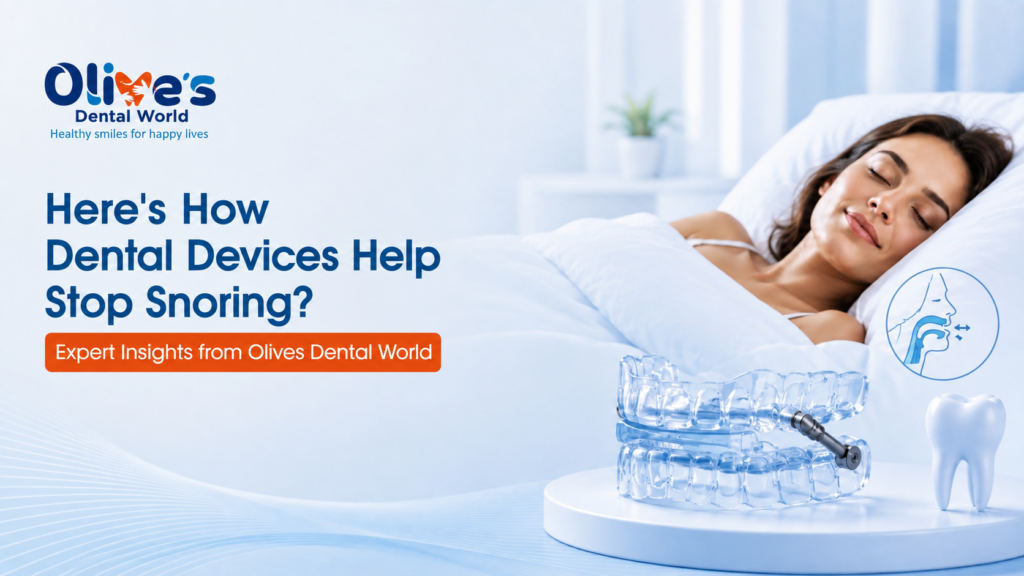
One of the most commonly used dental approaches is an oral appliance, particularly a mandibular advancement device (MAD).
This device is worn inside the mouth while sleeping. It gently positions the lower jaw forward, which can help increase the space in the upper airway and reduce the likelihood of the airway collapsing or becoming excessively narrow.
By helping maintain a more open airway, the device may reduce the vibration of soft tissues responsible for snoring.
The American Dental Association explains that oral appliances can reposition and stabilize structures such as the mandible and tongue to help maintain airway space during sleep.
What Is a Mandibular Advancement Device?
A mandibular advancement device is a specially designed oral appliance that holds the lower jaw slightly forward during sleep.
Unlike a standard night guard, which is primarily designed to protect teeth from grinding, an oral appliance for snoring or sleep apnea is specifically designed to influence the position of the jaw and airway.
A professionally fitted appliance may be:
- Custom-made for your mouth
- Adjustable to control the amount of jaw advancement
- Designed for comfortable nighttime use
- Monitored and adjusted by a qualified dental professional
Current dental sleep medicine standards emphasize appropriate screening, examination, appliance selection, fitting, calibration, and follow-up when oral appliance therapy is used.
Can Dental Devices Stop Snoring Completely?
Dental devices can significantly reduce snoring for some patients, but they are not a guaranteed cure for everyone.
The effectiveness of an oral appliance depends on factors such as:
- The underlying cause of snoring
- The anatomy of the patient’s airway
- Jaw position
- Severity of the condition
- Overall health
- Consistency of appliance use
- Proper fitting and adjustment of the appliance
Research and clinical guidelines support oral appliances as an effective option for appropriately selected adults with primary snoring. However, snoring can also be a symptom of obstructive sleep apnea, so proper evaluation is important before simply treating the sound of snoring.
Dental Devices vs. Over-the-Counter Snoring Devices
You may find inexpensive “anti-snoring” mouthpieces online or in stores. However, these are not necessarily suitable for everyone.
A professionally designed oral appliance can be customized and adjusted according to your dental structure and treatment needs.
Custom, titratable oral appliances are generally preferred over non-custom devices when oral appliance therapy is prescribed for obstructive sleep apnea.
This is one reason why consulting a qualified dental professional can be important before choosing a device.
What Happens During Dental Evaluation?
If you visit a dental clinic for snoring concerns, your dentist may evaluate:
1. Your Dental Health
The dentist checks your teeth, gums, bite, jaw, and overall oral health to determine whether an oral appliance is appropriate.
2. Your Jaw Position
The position and movement of your lower jaw can influence the upper airway. Your dentist may assess your jaw relationship and other oral structures.
3. Your Snoring Symptoms
You may be asked about the frequency and severity of your snoring, sleeping habits, daytime tiredness, and other symptoms.
4. Possible Sleep Apnea
If your symptoms suggest obstructive sleep apnea, you may need further evaluation by a physician or sleep specialist. Dentists can help identify risk factors but should not assume that all snoring is simply primary snoring.
5. Appliance Fit and Adjustment
If an oral appliance is appropriate, a custom device can be fitted and adjusted. Follow-up is important to monitor comfort, effectiveness, and possible dental or jaw-related side effects.
Benefits of Oral Appliance Therapy
For suitable patients, oral appliance therapy can offer several advantages:
- Comfortable and relatively simple to use
- Small and convenient for travel
- Does not require electricity
- Can reduce the intensity and frequency of snoring
- May be easier for some patients to tolerate than other sleep-apnea treatments
- Can be custom-fitted to the patient’s mouth
The AASM and AADSM guidelines recognize oral appliances as a treatment option for adults with primary snoring and for certain adults with obstructive sleep apnea, particularly when CPAP is not tolerated or an alternative is preferred.
Are There Any Side Effects?
Like any dental treatment, oral appliances can have side effects.
Some patients may experience:
- Temporary jaw discomfort
- Excess saliva or dry mouth
- Tooth or gum irritation
- Changes in the way the teeth come together
- Changes in bite over time
- Temporomandibular joint (TMJ) symptoms
Regular dental follow-up can help identify and manage these problems. The ADA specifically recommends monitoring patients using oral appliances for dental and jaw-related effects over time.
Expert Insight from Olives Dental World
Snoring should not always be treated as a simple nighttime inconvenience. In some individuals, it may be connected to an underlying airway or sleep-related breathing disorder.
A dental appliance may be an effective solution for appropriately selected patients, but the right treatment begins with identifying the cause of the snoring. A professional evaluation can help determine whether oral appliance therapy is suitable or whether further sleep evaluation is needed.
At Olives Dental World, patients can discuss their snoring concerns with dental professionals and explore appropriate treatment options based on their individual oral and jaw conditions.
FAQs
- Can a dental device help stop snoring?
Yes. Oral appliances, particularly mandibular advancement devices, can help reduce snoring in appropriately selected patients by helping keep the upper airway more open during sleep. - What is a mandibular advancement device?
A mandibular advancement device is a custom oral appliance worn during sleep that gently positions the lower jaw forward. This can help increase airway space and reduce airway collapse. - Are dental devices suitable for everyone who snores?
No. The cause and severity of snoring vary from person to person. Since snoring can be a symptom of obstructive sleep apnea, patients with symptoms such as breathing pauses, choking, or gasping during sleep may require further sleep evaluation. - Are custom dental devices better than over-the-counter mouthpieces?
For oral appliance treatment of obstructive sleep apnea, guidelines recommend a custom, titratable appliance provided by a qualified dentist rather than a non-custom device. - Can I use a dental device every night?
Oral appliances are designed for use during sleep, but they should be professionally fitted and monitored. Regular follow-ups help dentists check comfort, dental changes, jaw symptoms, and treatment effectiveness
A Better Night’s Sleep May Start with the Right Dental Solution
Persistent snoring can affect both your sleep and your quality of life. For suitable patients, a properly fitted oral appliance can help reposition the lower jaw, support a more open airway, and reduce snoring.
However, snoring can sometimes be a warning sign of obstructive sleep apnea. That’s why choosing the right treatment should begin with a professional evaluation rather than purchasing a generic device.
If snoring is disturbing your sleep or your partner’s sleep, consult Olives Dental World to find out whether an oral appliance could be the right option for you.
Book your consultation: +91 954 20 32 323
visit our website: https://olivesdentalworld.com/about/