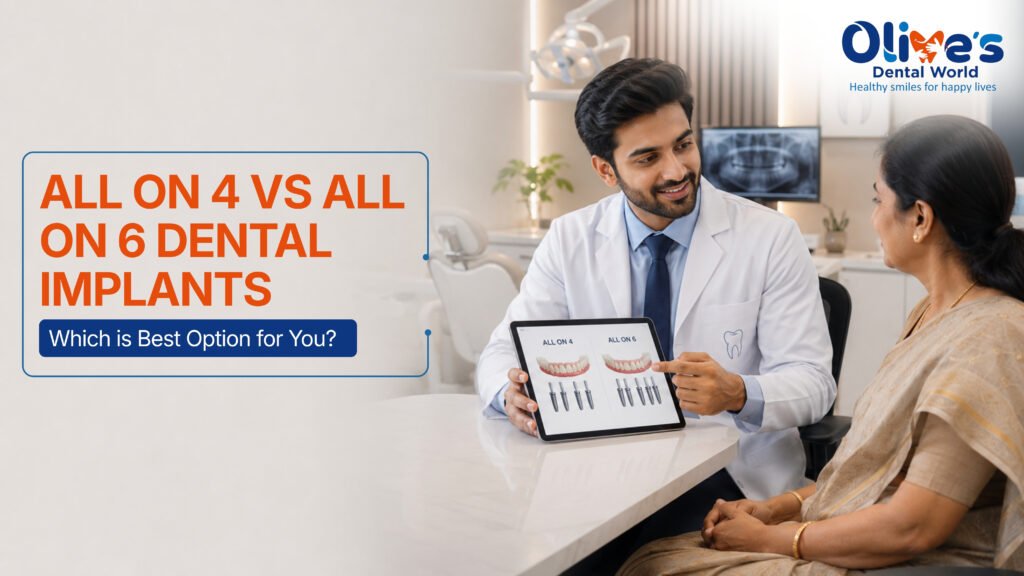
Both All-on-4 and All-on-6 dental implants are advanced full-mouth tooth replacement solutions that restore your smile, confidence, and chewing ability. However, many patients wonder which option offers better stability, durability, and long-term value.
The answer depends on several factors, including your jawbone condition, oral health, lifestyle, and budget. While both treatments provide fixed, natural-looking teeth, they differ in the number of implants used, the level of support provided, and the ideal candidates for each procedure.
This guide explains the differences between All-on-4 and All-on-6 dental implants, helping you understand which treatment may be the best choice for your smile.
Understanding Full Mouth Dental Implants
Losing all or most of your teeth can affect much more than your appearance. It can make eating difficult, change the way you speak, and even lead to gradual jawbone loss.
Modern implant dentistry offers a permanent solution through full-mouth dental implants. Instead of replacing each missing tooth individually, a complete set of artificial teeth is supported by a small number of strategically placed dental implants.
The two most common treatment options are:
- All-on-4 Dental Implants
- All-on-6 Dental Implants
Both procedures provide fixed teeth that look, feel, and function like natural teeth.
What Are All-on-4 Dental Implants?
All-on-4 is a full-mouth restoration technique that uses four dental implants to support an entire arch of replacement teeth.
Two implants are placed vertically at the front of the jaw, while the two back implants are inserted at an angle to maximize available bone and improve stability.
This design often eliminates the need for bone grafting, making it an excellent option for many patients with moderate bone loss.
Benefits of All-on-4
- Requires only four implants
- Shorter surgical procedure
- Less invasive treatment
- Faster healing in many cases
- Lower overall treatment cost
- Suitable for patients with moderate jawbone loss
- Often avoids bone grafting
What Are All-on-6 Dental Implants?
All-on-6 follows the same concept as All-on-4 but uses six dental implants instead of four.
The two additional implants provide extra support and distribute chewing forces more evenly across the jawbone.
This option is often recommended for patients who have sufficient bone density and want maximum stability for their permanent teeth.
Benefits of All-on-6
- Greater stability
- Better weight distribution
- Increased durability
- Excellent chewing efficiency
- Reduced stress on each implant
- Long-term support for stronger bone preservation
- Ideal for patients with good jawbone volume
All-on-4 vs All-on-6: Key Differences
| Feature | All-on-4 | All-on-6 |
| Number of Implants | 4 | 6 |
| Stability | Very Good | Excellent |
| Bone Support | Moderate | High |
| Implant Distribution | Limited | Wider and more balanced |
| Chewing Strength | Excellent | Superior |
| Treatment Cost | Lower | Higher |
| Surgery Time | Shorter | Slightly Longer |
| Suitable for Bone Loss | Yes | Usually requires better bone density |
Bone Density Matters
One of the biggest deciding factors is the amount of healthy jawbone available.
All-on-4 May Be Better If You Have:
- Moderate bone loss
- Limited jawbone volume
- Desire to avoid bone grafting
- Need for a quicker treatment plan
All-on-6 May Be Better If You Have:
- Good bone density
- Healthy jaw structure
- Strong chewing habits
- Desire for maximum long-term support
A detailed dental examination and 3D CBCT scan help determine the best option.
Treatment Procedure
The process is similar for both treatments.
Step 1: Consultation
The dentist performs:
- Oral examination
- Digital X-rays
- CBCT scan
- Medical history review
- Treatment planning
Step 2: Implant Placement
Dental implants are surgically inserted into the jawbone under local anesthesia or sedation.
Step 3: Temporary Teeth
Many patients receive temporary fixed teeth on the same day or within a few days after surgery.
Step 4: Healing Phase
The implants gradually fuse with the jawbone through a process called osseointegration, which usually takes several months.
Step 5: Permanent Prosthesis
Once healing is complete, custom-designed permanent teeth are securely attached to the implants.
Which Option Lasts Longer?
Both All-on-4 and All-on-6 implants can last for decades with proper care.
However, All-on-6 may offer slightly better long-term durability because:
- Chewing forces are distributed across six implants.
- Each implant bears less pressure.
- Additional support helps reduce mechanical stress.
Regular dental check-ups and good oral hygiene play a significant role in the longevity of either treatment.
Cost Comparison
The cost varies depending on several factors:
- Number of implants
- Implant brand
- Bone grafting requirements
- Type of prosthetic teeth
- Clinic location
- Dentist’s expertise
Generally:
- All-on-4 is more affordable because it uses fewer implants.
- All-on-6 costs more but provides additional support and stability.
When evaluating cost, it’s important to consider long-term value rather than the initial expense alone.
Caring for Your Dental Implants
To ensure long-lasting results:
- Brush twice daily using a soft-bristled toothbrush.
- Clean around the implants with floss or interdental brushes.
- Use an antimicrobial mouth rinse if recommended.
- Avoid smoking and tobacco products.
- Limit very hard or sticky foods during the healing phase.
- Visit your dentist regularly for professional cleaning and implant check-ups.
Proper maintenance is essential for protecting both the implants and surrounding gum tissue.
How to Choose Between All-on-4 and All-on-6
The right choice depends on your individual needs.
Choose All-on-4 if you:
- Have moderate jawbone loss.
- Want a cost-effective solution.
- Prefer a less invasive procedure.
- Wish to avoid bone grafting when possible.
Choose All-on-6 if you:
- Have adequate bone density.
- Want enhanced stability.
- Desire maximum chewing strength.
- Are looking for additional long-term support.
There is no one-size-fits-all solution. A personalized treatment plan based on your oral health, bone condition, and lifestyle will deliver the best results.
Frequently Asked Questions (FAQs)
1. Is All-on-6 better than All-on-4?
Not necessarily. All-on-6 provides greater support and stability, while All-on-4 is ideal for many patients with moderate bone loss and offers excellent results with fewer implants.
2. Which treatment is more affordable?
All-on-4 is generally less expensive because it requires fewer implants and a shorter surgical procedure.
3. Can I eat normally after treatment?
Yes. Once the implants have fully integrated with the jawbone and the permanent prosthesis is placed, most patients can comfortably enjoy a wide variety of foods.
4. How long do All-on-4 and All-on-6 implants last?
With proper oral hygiene, routine dental visits, and healthy habits, both treatments can last for many years, often several decades.
5. Will I need bone grafting?
Many patients receiving All-on-4 can avoid bone grafting due to the angled placement of the posterior implants. The need for grafting with All-on-6 depends on the amount and quality of available jawbone.
Restore Your Smile with the Right Full-Arch Implant Solution
Both All-on-4 and All-on-6 dental implants are highly effective solutions for restoring a full smile. While All-on-4 is an excellent option for patients seeking a minimally invasive and cost-effective treatment, All-on-6 offers additional stability and support for those with sufficient bone and a desire for enhanced long-term durability.
The best option depends on your individual oral health, jawbone condition, and treatment goals. Consulting an experienced implant dentist and undergoing a comprehensive evaluation will help determine which solution is most suitable for achieving a healthy, functional, and confident smile.
Book your consultation: +91 954 20 32 323
visit our website: https://olivesdentalworld.com/about/