Worn-down, broken, missing, or severely damaged teeth can affect much more than your smile. They may make chewing difficult, cause tooth sensitivity, affect your speech, and gradually change the way your upper and lower teeth come together. When several teeth have been affected by decay, wear, fractures, gum problems, or missing teeth, treating each tooth separately may not always provide the best long-term result.
Full mouth rehabilitation is a comprehensive dental treatment approach designed to restore the health, function, appearance, and balance of multiple teeth. For patients looking for full mouth rehabilitation in Madhapur, this treatment can provide a customized solution for rebuilding severely damaged or worn-down teeth.
What Is Full Mouth Rehabilitation?
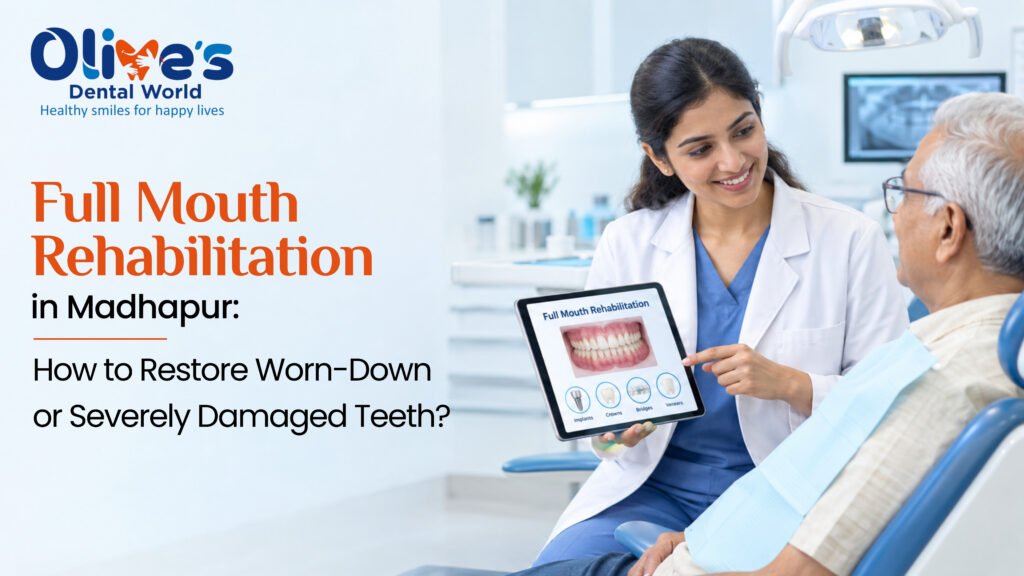
Full mouth rehabilitation, also called full mouth reconstruction, involves planning and combining different dental procedures to restore several teeth or the entire mouth.
Depending on a patient’s dental condition, treatment may include:
- Dental crowns
- Bridges
- Dental implants
- Tooth-colored fillings
- Root canal treatment
- Veneers
- Dentures
- Gum treatment
- Bite correction
- Other restorative or cosmetic dental procedures
The treatment plan is not the same for everyone. A dentist first evaluates the condition of the teeth, gums, jaw joints, bite, and overall oral health before recommending suitable procedures.
When Is Full Mouth Rehabilitation Needed?
Full mouth rehabilitation may be recommended when multiple teeth are significantly damaged or when oral function has been affected.
Common situations include:
1. Severely Worn-Down Teeth
Teeth can gradually become shorter or flatter because of tooth grinding, clenching, acidic foods, improper bite, or other factors. Excessive tooth wear may cause sensitivity and difficulty chewing.
Full mouth rehabilitation can help restore the shape and function of affected teeth.
2. Multiple Broken or Cracked Teeth
Accidents, biting hard objects, untreated cavities, or weakened teeth can result in fractures. If several teeth are damaged, a comprehensive treatment plan may be needed instead of treating each problem independently.
3. Extensive Tooth Decay
Advanced tooth decay can weaken multiple teeth. Depending on the amount of remaining healthy tooth structure, treatment may involve fillings, crowns, root canal treatment, or replacement of teeth that cannot be saved.
4. Missing Teeth
Missing teeth can affect chewing and may allow neighboring teeth to shift. Dental implants, bridges, or dentures may be considered as part of a full mouth rehabilitation plan.
5. Severe Bite Problems
An uneven bite can place excessive pressure on certain teeth. If the bite is significantly affected by worn or damaged teeth, rehabilitation may focus on restoring a more balanced relationship between the upper and lower teeth.
6. Long-Term Dental Problems
Patients who have experienced multiple dental problems over many years may have a combination of cavities, missing teeth, worn teeth, old restorations, gum problems, and bite issues. Full mouth rehabilitation can bring these concerns together into one coordinated treatment plan.
What Causes Teeth to Become Severely Worn or Damaged?
Several factors can contribute to significant tooth damage.
Teeth Grinding and Clenching
Bruxism, or grinding and clenching the teeth, can gradually wear away the protective enamel. In severe cases, teeth may become visibly shorter and more sensitive.
Poor Oral Hygiene
Inadequate brushing and flossing can increase the risk of plaque buildup, cavities, and gum disease. Untreated dental problems can eventually lead to extensive tooth damage.
Acid Erosion
Frequent exposure to acidic foods, beverages, or stomach acid can weaken tooth enamel. Over time, this may contribute to erosion and increased sensitivity.
Trauma
Falls, sports injuries, accidents, or other trauma can crack or break teeth.
Large or Old Dental Restorations
Older fillings or restorations may become damaged or fail over time. In some cases, the remaining tooth structure may also become weakened.
Missing Teeth
When teeth are lost and not replaced, the surrounding teeth may shift or tilt. This can affect the bite and make chewing less efficient.
How Does Full Mouth Rehabilitation Work?
Full mouth rehabilitation generally involves several stages. The exact process depends on the patient’s condition.
Step 1: Comprehensive Dental Examination
The dentist evaluates the teeth, gums, bite, jaw movement, and overall oral health. Digital photographs, X-rays, scans, or other diagnostic procedures may be used when required.
This assessment helps identify which teeth can be preserved and which may require restoration or replacement.
Step 2: Treatment Planning
After the examination, the dentist develops a personalized treatment plan. The plan may combine restorative, preventive, periodontal, cosmetic, and implant procedures.
The dentist may also prioritize urgent problems such as infections, severe decay, or gum disease before moving to other treatments.
Step 3: Treating Existing Dental Problems
Any active dental infection, decay, or gum disease should generally be addressed before major restorative work.
Root canal treatment may be recommended for teeth with infected or severely inflamed pulp. Teeth that cannot be restored may need to be removed and replaced.
Step 4: Restoring Damaged Teeth
Depending on the condition of the teeth, restorations such as fillings, crowns, bridges, or veneers may be used.
Crowns can help protect and restore significantly weakened teeth, while bridges can replace certain missing teeth.
Step 5: Replacing Missing Teeth
For suitable patients, dental implants can replace missing tooth roots and support crowns, bridges, or other restorations. Dentures may also be considered depending on the number of missing teeth and the patient’s individual requirements.
Step 6: Restoring the Bite
A balanced bite is an important part of full mouth rehabilitation. The dentist evaluates how the upper and lower teeth meet and makes appropriate adjustments through restorative treatment.
Step 7: Final Restoration and Follow-Up
Once treatment is completed, the dentist checks the function, comfort, appearance, and bite of the restorations. Regular dental check-ups and good oral hygiene are essential for maintaining the results.
Benefits of Full Mouth Rehabilitation
A carefully planned full mouth rehabilitation can offer several benefits, including:
- Improved chewing ability
- Restoration of damaged teeth
- Replacement of missing teeth
- Improved tooth function
- Better bite balance
- Improved smile appearance
- Reduced sensitivity in appropriately treated teeth
- Better overall oral function
- Improved confidence when smiling
The results depend on the patient’s oral health, treatment needs, habits, and commitment to follow-up care.
Is Full Mouth Rehabilitation Painful?
Many dental procedures used during full mouth rehabilitation can be performed with appropriate local anesthesia and modern pain-management techniques.
Some sensitivity or discomfort may occur after certain procedures, especially during the healing period. Your dentist can explain what to expect based on the specific treatments included in your rehabilitation plan.
If you are anxious about dental treatment, discuss your concerns with your dentist before beginning the procedure.
How Long Does Full Mouth Rehabilitation Take?
The treatment duration varies considerably from patient to patient.
A person requiring a few restorations may complete treatment relatively quickly, while someone with multiple missing teeth, infections, gum disease, severe tooth wear, or implants may require treatment over several appointments and stages.
Your dentist can provide a more accurate timeline after completing a detailed examination and treatment plan.
How Much Does Full Mouth Rehabilitation Cost in Madhapur?
The cost of full mouth rehabilitation varies because every treatment plan is different. The overall cost may depend on:
- Number of teeth requiring treatment
- Type of dental restorations
- Need for root canal treatment
- Number of missing teeth
- Dental implant requirements
- Gum treatment
- Type and quality of materials used
- Complexity of the bite correction
- Number of appointments required
Instead of choosing treatment based only on price, patients should consider the dentist’s experience, treatment planning, quality of materials, technology used, and long-term maintenance requirements.
A dental consultation is the best way to understand the expected treatment and cost for your specific condition.
Who Is a Good Candidate for Full Mouth Rehabilitation?
Full mouth rehabilitation may be suitable for adults who have multiple dental concerns, such as severely worn teeth, extensive decay, broken teeth, missing teeth, failing restorations, or significant bite problems.
However, candidacy depends on individual oral and general health. Patients with active gum disease or dental infections may need those conditions treated before restorative procedures are completed.
How to Maintain Your Results After Full Mouth Rehabilitation
Maintaining good oral hygiene is essential after rehabilitation.
Follow these habits:
- Brush twice a day with a fluoride toothpaste.
- Floss or use an appropriate interdental cleaning method daily.
- Attend regular dental check-ups.
- Avoid chewing extremely hard objects.
- Follow your dentist’s instructions for protecting dental restorations.
- If you grind or clench your teeth, ask your dentist whether a night guard may be appropriate.
Maintain a balanced diet and limit excessive sugary or acidic foods and drinks.Regular professional dental care can help detect problems early and extend the life of your restorations.
Why Choose Full Mouth Rehabilitation in Madhapur?
If several teeth are damaged or worn down, treating each problem individually may not always address the underlying bite and functional concerns. Full mouth rehabilitation provides a coordinated approach in which different dental treatments are planned together.
Patients looking for full mouth rehabilitation in Madhapur can consult an experienced dental team for a detailed evaluation and personalized treatment plan. The goal is not simply to improve the appearance of the smile but also to restore comfortable chewing, tooth function, and long-term oral health.
FAQs
1. What is full mouth rehabilitation?
Full mouth rehabilitation is a comprehensive treatment approach that combines different dental procedures to restore multiple damaged, worn, or missing teeth and improve oral function.
2. Can full mouth rehabilitation fix severely worn-down teeth?
Yes. Depending on the amount of remaining tooth structure and the cause of the wear, treatments such as crowns, fillings, veneers, or other restorations may help restore worn teeth.
3. Does full mouth rehabilitation include dental implants?
Dental implants may be included when teeth are missing and the patient is an appropriate candidate. The dentist will assess bone and gum health before recommending implants.
4. How long does full mouth rehabilitation take?
Treatment time varies depending on the number and type of procedures required. Complex cases may need several appointments and treatment stages.
5. How can I find the right dentist for full mouth rehabilitation in Madhapur?
Look for a dental clinic with experience in comprehensive restorative treatment, detailed treatment planning, modern diagnostic technology, and a focus on both dental function and aesthetics.
Rebuild Your Smile and Restore Your Dental Health
Severely worn-down, broken, decayed, or missing teeth do not always mean that you have to live with discomfort or an unhealthy smile. Full mouth rehabilitation can combine restorative and replacement procedures to rebuild damaged teeth and improve overall oral function.
If you are experiencing multiple dental problems, difficulty chewing, excessive tooth wear, broken teeth, or missing teeth, consult a qualified dentist in Madhapur. A comprehensive examination can help determine which treatments are suitable for you and how your smile and oral function can be restored step by step.
contact :91 954 20 32 32
visit out website:https://olivesdentalworld.com/