A healthy smile is about more than just appearance. Your teeth play an essential role in chewing, speaking, maintaining facial structure, and supporting overall oral health. However, severely worn, damaged, or missing teeth can affect these everyday functions and reduce your confidence. When multiple teeth require treatment, full mouth rehabilitation in Madhapur can offer a comprehensive approach to restoring your smile, comfort, and dental function.
At Olives Dental World, patients can explore suitable restorative and rehabilitative dental treatments based on their oral health needs, the condition of their remaining teeth, and their long-term goals.
In this blog, we discuss full mouth rehabilitation, the common causes of extensive dental damage, available treatment options, and what patients can expect during the process.
What Is Full Mouth Rehabilitation?
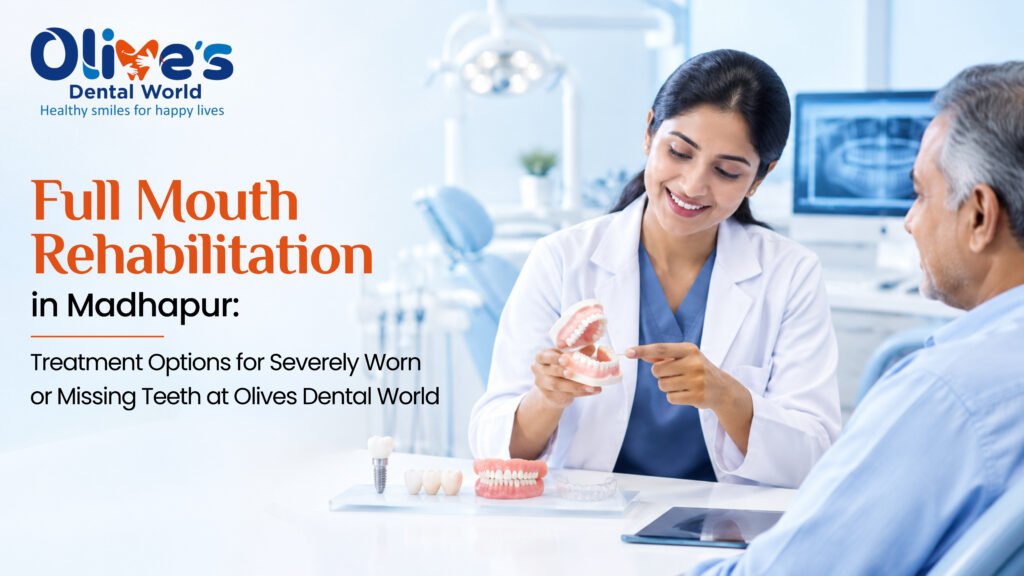
Full mouth rehabilitation, also known as full mouth reconstruction, involves restoring or replacing multiple teeth in the upper jaw, lower jaw, or both. It combines different dental procedures to improve oral function, tooth structure, bite alignment, and smile aesthetics.
Unlike a routine dental treatment that addresses a single tooth, full mouth rehabilitation focuses on the overall condition of the mouth. The treatment plan may include restorative, prosthetic, periodontal, or other dental procedures, depending on the patient’s requirements.
The primary goals of full mouth rehabilitation include:
- Restoring the ability to chew comfortably.
- Repairing severely worn, cracked, or damaged teeth.
- Replacing missing teeth to improve function and appearance.
- Improving bite balance and tooth alignment where necessary.
- Supporting gum health and protecting remaining natural teeth.
- Enhancing the appearance of the smile and facial profile.
Every patient has different dental needs, so treatment should be planned following a detailed clinical examination.
What Causes Severely Worn or Missing Teeth?
Several factors can contribute to extensive tooth damage or tooth loss. Identifying the underlying cause is an important step toward achieving lasting results.
1. Teeth Grinding and Clenching
Bruxism, or habitual teeth grinding and clenching, can gradually wear down the enamel. Over time, teeth may become shorter, flatter, sensitive, or more vulnerable to fractures. Severe cases may also affect the jaw muscles and temporomandibular joints.
2. Tooth Decay
Untreated cavities can progressively damage the tooth structure. When decay becomes extensive, a simple filling may no longer be sufficient, and the tooth may require a crown, root canal treatment, or extraction if it cannot be restored.
3. Gum Disease
Advanced periodontal disease can damage the tissues and bone that support the teeth. As the condition progresses, teeth may become loose and eventually require removal.
4. Dental Injuries
Accidents, sports injuries, and other forms of trauma can cause broken, displaced, or missing teeth. Depending on the severity of the damage, restorative treatment or tooth replacement may be necessary.
5. Acid Erosion and Long-Term Wear
Frequent exposure to acidic foods and drinks, acid reflux, and certain other conditions can contribute to enamel erosion. Combined with normal chewing forces or grinding, this may lead to significant tooth wear.
6. Long-Term Tooth Loss
When teeth are missing for an extended period, chewing efficiency may decrease, and neighbouring teeth may shift into the spaces. Bone loss can also occur in areas where teeth have been lost, potentially affecting future treatment options.
Treatment Options for Full Mouth Rehabilitation in Madhapur
The right treatment depends on the number of affected teeth, the health of the gums and jawbone, bite relationships, and the patient’s expectations. A dentist may recommend one procedure or a combination of treatments.
1. Dental Crowns for Severely Worn or Damaged Teeth
Dental crowns are protective restorations that cover a damaged tooth to restore its shape, strength, and function. They may be recommended for teeth with extensive wear, large fillings, cracks, or damage following root canal treatment.
Crowns can help restore the height and appearance of worn teeth when clinically appropriate. The material used may vary according to the tooth’s location, bite forces, aesthetic requirements, and available treatment options.
Benefits of dental crowns include:
- Restoring the shape and function of weakened teeth.
- Protecting remaining tooth structure.
- Improving the appearance of damaged or discoloured teeth.
- Supporting more balanced chewing when incorporated into a carefully planned rehabilitation.
Crowns are not suitable for every damaged tooth. The remaining tooth structure and the condition of the surrounding gums must be evaluated first.
2. Dental Implants for Missing Teeth
Dental implants are a tooth-replacement option that uses a small implant placed in the jawbone to support a replacement tooth. Once the implant has integrated with the bone, it can support a crown, bridge, or—in selected cases—a full-arch restoration.
Implants may be considered for patients missing one tooth, several teeth, or most of their teeth. Adequate bone support and healthy oral tissues are important for treatment success.
Potential advantages of dental implants include:
- Providing stable support for replacement teeth.
- Restoring chewing function.
- Avoiding the need to rely on neighbouring teeth for support in many single-tooth cases.
- Helping maintain bone in the treated area through functional loading.
Implant treatment may require additional procedures if bone volume is insufficient. Factors such as gum disease, smoking, medical conditions, and oral hygiene can influence suitability and healing.
3. Dental Bridges to Replace Missing Teeth
A dental bridge replaces one or more missing teeth by placing artificial teeth in the gap, supported by neighbouring teeth or dental implants, depending on the design.
A traditional bridge may be suitable when adjacent teeth can appropriately support the restoration. An implant-supported bridge may be an option when several neighbouring teeth are missing and implant treatment is suitable.
Bridges can restore the appearance of the smile and improve chewing ability. However, traditional bridges generally require preparation of the supporting teeth, so the dentist must evaluate their strength and long-term prognosis before recommending this option.
4. Dentures for Multiple Missing Teeth
Dentures are removable appliances used to replace missing teeth. Depending on the patient’s needs, a dentist may recommend partial dentures for some missing teeth or complete dentures when all teeth in an arch are absent.
For patients seeking a non-surgical tooth-replacement option, conventional dentures may be worth considering. Implant-supported dentures are another option for selected patients who want additional retention and stability.
Modern dentures are designed to restore basic chewing function and improve smile appearance. Their comfort and stability depend on proper design, fit, and maintenance. Adjustments may be required over time as the shape of the gums and jawbone changes.
5. Full Mouth Crowns and Restorative Treatment
When several teeth have extensive structural damage or severe wear, multiple restorations may be needed to rebuild the chewing surfaces and improve the bite.
Depending on the diagnosis, a comprehensive plan may include crowns, onlays, fillings, or other restorative procedures. The dentist must determine how much tooth structure can be preserved and whether the teeth have a healthy foundation for restoration.
The goal is not simply to cover every tooth with a crown. Instead, treatment should preserve healthy natural tooth structure wherever possible and restore damaged teeth only when clinically justified.
6. Root Canal Treatment for Infected Teeth
When decay, trauma, or a crack affects the inner pulp of a tooth, root canal treatment may be necessary to remove infected or inflamed tissue and preserve the tooth.
After treatment, the tooth may require a suitable restoration to protect it from fracture. Whether a tooth can be saved depends on the amount of remaining structure, the extent of the infection, and the condition of the surrounding tissues.
If a tooth is too damaged to restore predictably, extraction and replacement may need to be considered instead.
7. Gum Treatment Before Restorative Procedures
Healthy gums provide an essential foundation for long-term dental rehabilitation. Patients with gingivitis or periodontal disease may require professional cleaning, deep cleaning, or other periodontal treatment before crowns, bridges, or implants are planned.
Treating gum disease can help reduce inflammation and improve the health of the tissues supporting the teeth. Maintaining good oral hygiene after rehabilitation is equally important for protecting restorations and preventing further tooth loss.
How Is Full Mouth Rehabilitation Planned at Olives Dental World?
Successful rehabilitation begins with a thorough assessment rather than choosing a procedure based only on appearance.
At Olives Dental World in Madhapur, patients seeking restorative dental care can discuss their concerns and the treatment options appropriate to their individual condition. A comprehensive rehabilitation plan generally involves the following stages.
Step 1: Comprehensive Dental Examination
The dentist evaluates the condition of the teeth, gums, bite, jaw function, and existing dental restorations. The examination helps identify the problems that need immediate attention and those that can be addressed later.
Step 2: Diagnostic Records and Imaging
Depending on the case, diagnostic records may include dental X-rays, photographs, digital scans, bite assessments, or other imaging. These help the dentist evaluate tooth structure, bone support, and the relationship between the upper and lower teeth.
Step 3: Personalised Treatment Planning
The dentist develops a treatment plan based on the patient’s oral health, functional needs, budget, and aesthetic preferences. If multiple procedures are required, they are arranged in a suitable sequence.
For example, active gum disease or infection may need to be treated before definitive crowns or implants can be placed.
Step 4: Restoring Teeth and Replacing Missing Teeth
Treatment may involve fillings, root canal therapy, crowns, bridges, implants, dentures, or a combination of these procedures. The exact sequence depends on the diagnosis and the healing time required between treatments.
Step 5: Bite Evaluation and Final Adjustments
Once the restorations are completed, the dentist checks the bite, chewing comfort, and fit of the restorations. Adjustments may be needed to ensure that the teeth meet appropriately and that excessive forces are not placed on individual restorations.
Step 6: Follow-Up and Maintenance
Regular dental check-ups help monitor the condition of the restorations, gums, and remaining natural teeth. Patients may also need professional cleaning, implant maintenance, denture adjustments, or a night guard if teeth grinding is present.
Who May Need Full Mouth Rehabilitation?
Full mouth rehabilitation may be considered for individuals who experience one or more of the following problems:
- Multiple missing teeth affecting chewing or appearance.
- Severely worn teeth caused by grinding or erosion.
- Several broken, cracked, or heavily restored teeth.
- Extensive tooth decay affecting multiple areas of the mouth.
- Bite problems associated with significant tooth wear or damage.
- A combination of tooth loss, gum problems, and weakened teeth.
Not every patient with missing or worn teeth needs full mouth reconstruction. Some conditions can be managed with simpler, more conservative treatment. A dental examination is necessary to determine the appropriate level of care.
What Are the Benefits of Full Mouth Rehabilitation?
When carefully planned and appropriately performed, full mouth rehabilitation can provide several benefits.
Improved chewing function: Rebuilding damaged teeth and replacing missing ones can make it easier to chew a wider variety of foods.
Better smile appearance: Restorations can improve the shape, colour, and proportions of damaged or missing teeth.
Restored bite balance: Correcting certain bite problems can help distribute chewing forces more appropriately across the teeth.
Preservation of remaining teeth: Treating decay, infection, gum disease, and weakened tooth structure can help protect teeth that are still healthy enough to retain.
Greater everyday comfort: Addressing sharp edges, damaged teeth, poorly fitting restorations, or unstable dentures may improve comfort during eating and speaking.
The results depend on the underlying dental condition, the selected treatments, the quality of maintenance, and individual healing factors. No dental procedure can guarantee permanent results.
How Long Does Full Mouth Rehabilitation Take?
The treatment duration varies according to the complexity of the case.
A patient who needs a few crowns may complete treatment relatively quickly, while someone requiring multiple implants, extractions, gum treatment, or extensive reconstruction may need several months or longer.
Dental implants often require a healing period before the final restorations can be attached. Temporary restorations may be used during treatment when appropriate.
During the consultation, patients should ask about the expected number of visits, healing periods, temporary teeth, and the overall treatment sequence.
What Is the Cost of Full Mouth Rehabilitation in Madhapur?
The cost of full mouth rehabilitation depends on the procedures involved and the extent of dental damage. There is no single price that applies to every patient.
Factors that can influence the total cost include:
- The number of teeth that need treatment or replacement.
- The type and material of crowns or bridges.
- Whether dental implants are required.
- The need for bone grafting or other preparatory procedures.
- The presence of gum disease or infection.
- Diagnostic investigations, temporary restorations, and follow-up care.
A detailed examination is the best way to obtain an individual treatment estimate. Patients can also discuss phased treatment options where appropriate, allowing essential dental problems to be addressed before less urgent restorative work.
When comparing treatment costs, it is important to consider the proposed materials, the procedures included, and the long-term maintenance requirements rather than choosing a treatment on price alone.
How Can You Maintain Your Results After Rehabilitation?
Good oral hygiene and regular dental visits are essential for protecting your restored smile.
- Brush twice daily with fluoride toothpaste.
- Clean between your teeth every day using suitable interdental cleaning aids.
- Follow your dentist’s recommendations for implant, bridge, crown, or denture care.
- Avoid chewing hard objects that could damage restorations.
- Wear a prescribed night guard if you grind or clench your teeth.
- Limit frequent exposure to sugary and acidic foods and drinks.
- Attend routine dental examinations and professional cleaning appointments.
- Seek dental care promptly if you experience pain, swelling, bleeding gums, a loose restoration, or changes in your bite.
Even well-made restorations need maintenance. Consistent care can help reduce the risk of future dental problems.
Why Consider Olives Dental World for Full Mouth Rehabilitation in Madhapur?
Choosing a dental clinic for extensive restorative treatment is an important decision. Full mouth rehabilitation requires careful diagnosis, a clear treatment sequence, attention to bite function, and appropriate follow-up.
At Olives Dental World, patients can discuss their concerns about worn teeth, missing teeth, chewing difficulties, and smile appearance with the dental team. The appropriate treatment plan should be based on a clinical assessment, with an emphasis on preserving natural teeth where possible and selecting restorations suited to each patient’s needs.
Before beginning treatment, patients should ask about the available options, expected outcomes, treatment duration, costs, maintenance requirements, and any potential risks.
Frequently Asked Questions (FAQs)
1. What is the best treatment for severely worn teeth?
The best treatment depends on the cause and extent of tooth wear. Options may include fillings, onlays, crowns, and a night guard for teeth grinding. The dentist may also recommend addressing acid erosion or other contributing factors.
2. Can missing teeth be replaced with dental implants?
Yes. Dental implants can replace individual teeth or support bridges and full-arch restorations in suitable patients. Bone support, gum health, medical history, and oral hygiene should be evaluated before treatment.
3. Is full mouth rehabilitation painful?
Dental procedures are generally performed with appropriate local anaesthesia when needed. Some discomfort, sensitivity, or swelling may occur during recovery, depending on the procedures involved. Your dentist can explain the expected recovery and available pain-management options.
4. How long do full mouth rehabilitation results last?
Longevity varies according to the type of restoration, bite forces, oral hygiene, and maintenance. Regular dental visits and appropriate home care help protect the results.
5. Is full mouth rehabilitation suitable for older adults?
Age alone does not determine suitability. The patient’s general health, gum condition, bone support, and treatment goals are more important factors when selecting restorative options
Book Your Full Mouth Rehabilitation Consultation at Olives Dental World, Madhapur
Severely worn or missing teeth can affect oral function, appearance, and everyday confidence. Full mouth rehabilitation in Madhapur offers a comprehensive way to address these problems through individually planned treatments such as dental crowns, bridges, implants, dentures, root canal therapy, and gum treatment.
At Olives Dental World, a detailed dental assessment can help determine which treatment options are appropriate for your condition and how they can be sequenced to support a healthier, more functional smile.
If you are experiencing extensive tooth wear, multiple missing teeth, or difficulty chewing, consider arranging a dental consultation to understand your options. Early evaluation can help identify problems, preserve treatable teeth, and establish a practical plan for restoring your smile.
Book a consultation with Olives Dental World in Madhapur to discuss your full mouth rehabilitation needs and explore suitable restorative dental solutions.
contact :91 954 20 32 32
visit out website:https://olivesdentalworld.com/